To the scientific women who mentored me: Thank you.

published at The Xylom

My growth depended on the myriad of women who mentored me, inspired me, and invested years into my development as a critical thinker. They valued me as a scientist and challenged me to think of myself as one. They made room for me in the pipeline.  Although I can’t formally acknowledge each scientist who made an impact on me, this piece focuses on three scientists, their contributions, and the ways their mentorship impacted me:

Lauren Wugalter
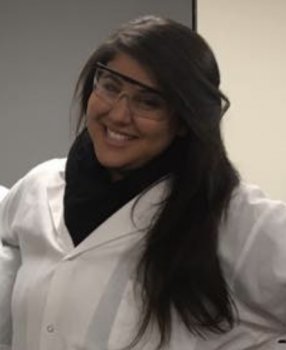
Lauren Wugalter gave me my first impression of science as I know and love it today. Lauren is a faculty member at Highline College where she teaches general chemistry for science and engineering majors. She was recently awarded the Distinguished Community Engagement Award in 2018 by the University of Washington, Tacoma, where she was formerly an instructor.

Lauren is passionate about engaging women and minorities in STEM fields, and she kindles science-enthusiasm within everyone she meets. Since her undergraduate career, Lauren dedicated herself to engaging the community in celebration of science. She served as the executive outreach coordinator for the Student Members of the American Chemical Society (SMACS) and her research contributions earned her two publications for her work in designing novel opioids for the treatment of chronic pain. Her exemplary performance in academics, research and outreach earned her many awards including the American Chemical Society POLYED Undergraduate Award for Achievement in Organic Chemistry, the University of Arizona Galileo Circle Scholar, and the University of Arizona Chemistry and Biochemistry Outstanding Senior Award. She went on to pursue a Chemistry Graduate Fellowship at the University of Washington, where she earned her master’s degree.

Lauren is probably the best person to give you an introduction to the wonderful world of science. I met Lauren in my freshman year of college. I knew nothing about professional science and was a pre-med student because I didn’t know what other stable job opportunities existed for a biology nerd. After Lauren presented her research in the chemistry club, I was hooked. She promptly whisked me off to give me a lab-tour where I saw round bottom flasks with balloons secured to their necks, and intricate, alien-looking apparatuses. I had no idea what I was looking at. I was only halfway through my first semester of general chemistry and I was feeling overwhelmed. Despite this, Lauren believed that I could learn everything I needed to know in order to do multistep organic synthesis. If it weren’t for Lauren’s encouraging presence, my bewilderment may have dissuaded me from returning. I stayed in the summer to teach myself enough organic chemistry to appreciate the science I was doing in the lab.

Beyond her warmth, Lauren’s agency in the lab impressed me. Through years of research experience, she built a vast amount of knowledge cultivated a formidable scientific acumen. She was someone I could count on and aspire to. I soon became a fixture in the lab and realized my own love of science over the years. I changed my career prospects from medical school to research science because I was having so much fun in the lab. I credit Lauren with helping me realize a love of the laboratory, a gift I cherish every day.

Rebekah Keating
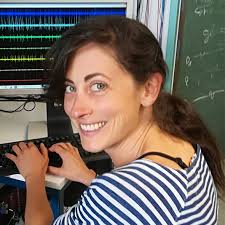
Rebekah Keating is a Neuroscience Ph.D. candidate at the University of Arizona. Her research investigates the pathways and neural traits underlying decision-making in insects. She seeks to understand how complex group-level patterns of behavior emerge from the distribution of individual traits. As an undergraduate she studied biology at the University of Vermont where she earned the Vermont Scholars Award and the George Perkins Marsh Award in Ecology and Evolution. She continues to excel in her doctoral training earning the Galileo Circle Scholarship in 2017 and 2018. As the recipient of the DAAD Research Fellowship, she currently studies in Göttingen, Germany where she uses electrophysiology to study how the brains of honeybees and carpenter ants respond to odors, including those encoding social cues.

Inside the lab and out in the field, Rebekah invests her expertise into cultivating the next generation of naturalists. She’s spent years mentoring undergraduate students and high school students in research projects, including my own senior thesis project. Spanning a little over one and a half years, Keating guided my project from the preliminary phases until the final poster presentation. Her vast working knowledge of evolutionary biology, neuroscience, and statistics enriched the quality of my research. She helped me design prototypes for my experimental set-ups and gave me a lab notebook and a workplace within her office. After I collected data, she spent hours teaching me how to code using R studio and I consulted her in my selection of a statistical model that would best analyze my data. She took the time to teach me the concepts underlying the statistical models we were considering, and for the first time I felt like I had a solid understanding of statistics.

I feel strongly that these one-on-one sessions with Rebekah did more to develop me as an independent scientist than any other academic pursuit. She gave me tools that empowered me to think critically about the questions I wanted to ask, the experiments that could answer them, and the veracity of the data collected. Looking back, I feel immense gratitude for Rebekah’s mentorship and the skills she taught me. Beyond learning a bit of code, neuroethology, and a lot of statistics, she inspired me to be a more thoughtful scientist and an avid naturalist.

Dr. Khanna (May)
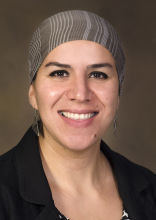
After obtaining my B.Sc., I spent a year working as a research technician in May Khanna’s lab. Dr. Khanna is a tenure-track assistant professor at the University of Arizona. Her research incorporates biochemical and biophysical techniques to assess protein-protein and protein-RNA interactions and their implications in neurodegenerative disease. The goal of her research is to develop effective therapeutics based on a refined understanding of these interactions. In addition to her role as a Principal Investigator, she is also a co-founder of Regulonix, a biotechnology company which aims to develop non-opioid treatments for chronic pain.

May leads an industrious laboratory bustling with a diversity of cutting-edge techniques and exciting collaborations. My favorite part of working in this lab was the diversity of projects and the collaborative efforts that spanned labs, universities, and companies. Each week, each student gave a presentation on the progress and obstacles in their research. The audience consisted of members from each of the collaborating labs, skilled in various fields. This brilliant design allowed for an interdisciplinary approach to problem-solving and served as a breeding ground for new ideas. These meetings made me value science as an interdisciplinary social enterprise. May’s mentorship helped me gain confidence in myself as a professional scientist because she challenged me to make decisions regarding my project. When experiment after experiment failed, I would start to feel burnt-out. During these trying times, she reminded me of the good things she saw in me and encouraged me to talk to her and others in the lab to find solutions. This process helped me realize the value of resilience in scientific pursuits.
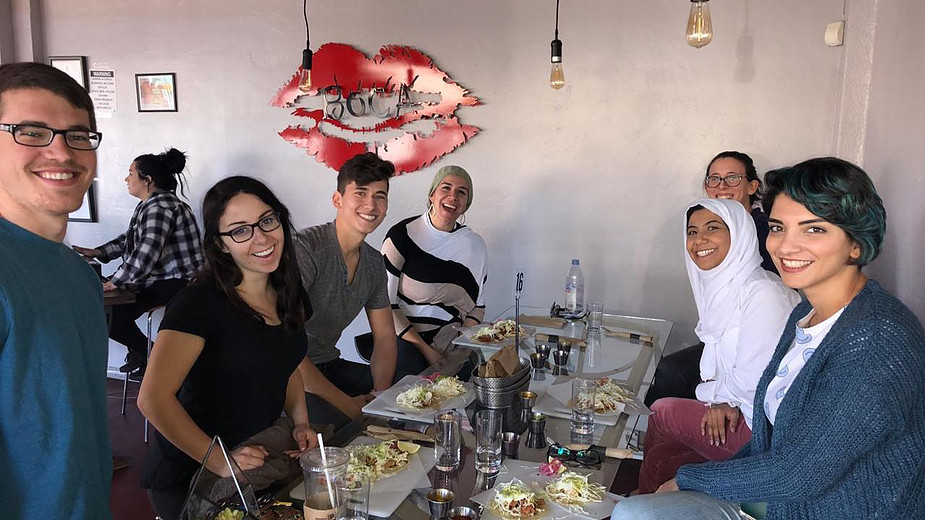
The Khanna lab celebrate’s Razaz’s successful defense


With the dearth of women and minorities in academic science, mentors provide an invaluable service to under-represented demographics. Because many of us don’t have family members in academia to look up to, mentors are often the first to model higher-order professional skills such as collaboration, scholarship, and communication. Mentors provide direction and set standards on the quality of work done in the field. They can be the first to provide encouragement to build our own skills and confidence as we begin to transition from a student to a scientist. They serve as a gateway to departmental and disciplinary communities and help mentees form a network to establish connections. Where traditional coursework fails to teach us how to create new knowledge from the unknown, mentors must step in.

In addition to investing time into my development, my mentors gave me a chance to succeed in science by being exemplary scientists themselves. Many of us will become mentors in our careers. To help bridge the gender and ethnicity gaps in professional science, we should make sure that we are investing in mentees who come from a different background than our own.

Help Us Patch the Pipeline

We need to talk about implicit bias in STEM.


Photo by Amplitude Magazin on Unsplash

At first, my mom wasn’t sure if she should name me ‘Victoria’ or ‘Sydney’.

Privy to prejudices, she understood that a gender-neutral name could help inoculate her daughter against the discrimination she may face in her future career. Today I am a first-year neuroscientist seeking a doctorate degree from Emory University. I love my field: every day is a blessing as I get to run experiments in the lab, discuss literature with my friends, and learn from some of the best scientists in my field. This truly is the good-life.

Luckily, my upbringing largely sheltered me from the gender bias. Growing up, my parents poured their support into my interests without consideration of gender expectations. I revered my older brothers who invited my company as we built forts, shot nerf guns, played video games, and became backyard arsonists. I grew up with the expectation that wherever my interests may take me, a welcoming community will receive me as an equal. Now as an adult, I notice troubling trends that threaten women and minorities in their scientific careers. We need to discuss the effects of implicit bias in STEM

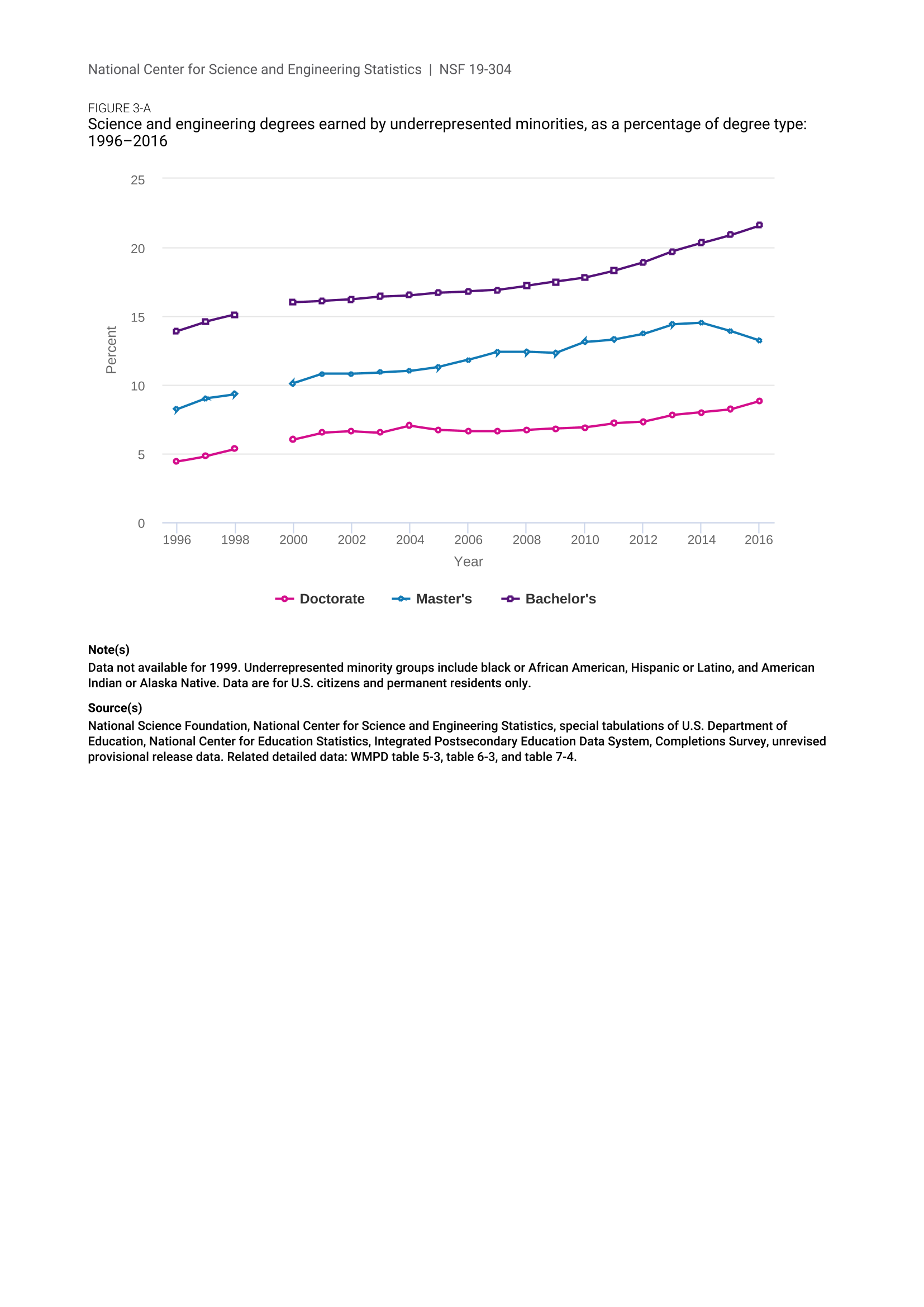
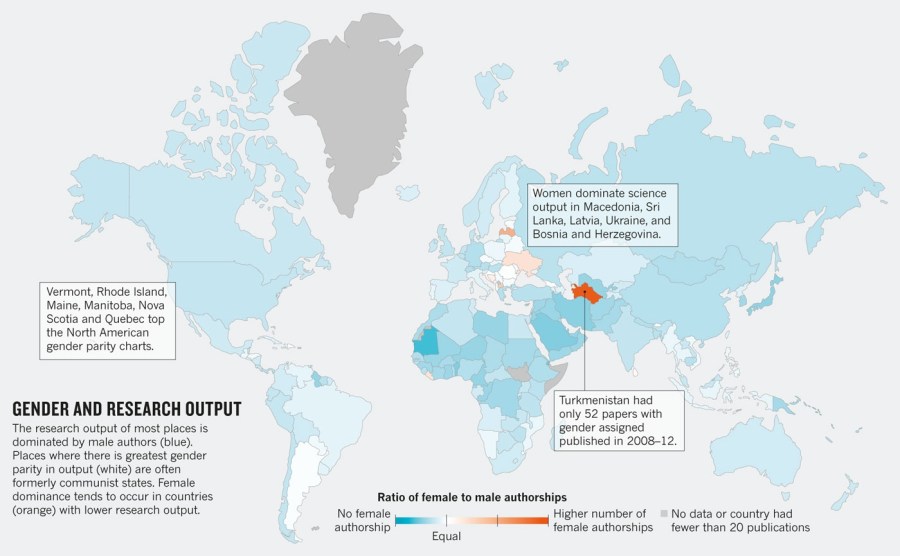
Most of my peers and all my former faculty members treated me with the utmost respect. Sometimes in a casual conversation with a colleague, implicit prejudices rang in the subtext. For example, when I shared the news of my first publication with a colleague at my undergraduate institution, he suggested that I got into that lab because I was an attractive woman. It seemed easier for him to believe that my success resulted from my outward appearance rather than years of hard work.  Although sexist, my colleague’s assumption relies on the fact that, statistically speaking, my PI is a heterosexual man. According to UNESCO Institute for Statistics (UIS), less than 30% of the world’s researchers are women (1). Although women receive over half of all Ph.D. degrees, only 22% and 15% reach tenure or become department chairs, respectively (2). Of all the graduate students pursuing STEM doctoral degrees, just 2% are Hispanic and 2% women of color (3). Our pipeline hemorrhages talent before it can reach the graduate level. What factors undermine women and minority access to a scientific career? 

.

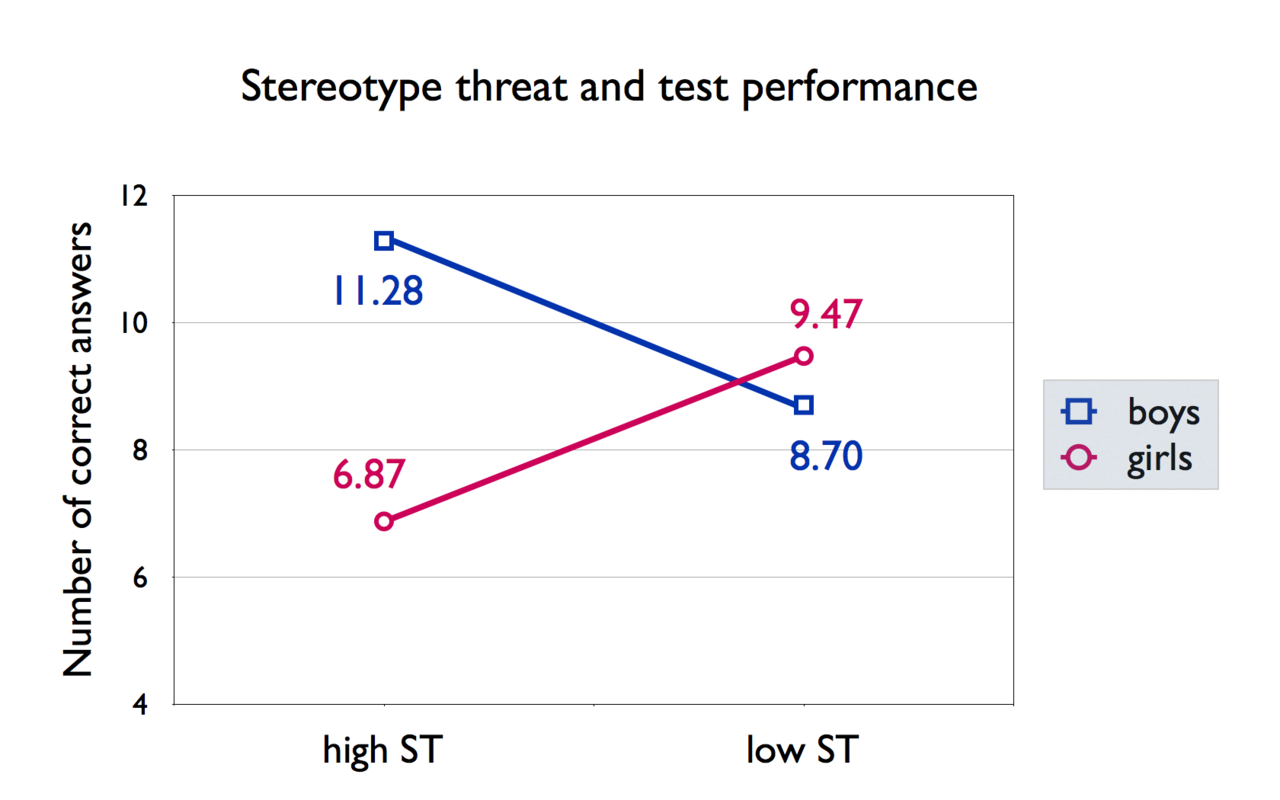
Women and minorities pursuing STEM fields contend with a barrage of biases at each career milestone. Upon applying to graduate school prospective students, take the General Record Exam (GRE). One scientifically demonstrated harm of societal prejudice is the stereotype threat in which the fear of living up to a stereotype impairs performance: an effect documented in standardized testing (4). The stereotype threat was one factor that contributed to my own anxiety I experienced while preparing for and taking the GRE. I took studying for the GRE seriously, as I enrolled in a GRE course, studied from several books, utilized online sources, and took dozens of practice exams. I began having regular panic attacks during studying and class-room sessions. I could not finish a practice exam without having an anxious episode. In addition to studying, I began seeking cognitive behavioral therapy so I could learn strategies to control my anxiety. After six months of studying and mental health work, I got to the point where I could finish on-site practice exams with satisfying percentile scores. Frustratingly, when it came time for the first quantitative section on the real test, anxious thoughts flooded my cognitive space. Many pressures contribute to my test-anxiety: one threat was the suspicion that stereotypes against women performing in quantitative fields might be true, and that my failure would contribute to this stereotype. Despite my love for mathematics and calculus in my college courses, racing thoughts of inadequacy interfered with my ability to focus on the test questions. A fear of having a panic attack in the test-center compounded these anxieties and I lost my composure. To avoid distracting the other test-takers, I felt that all I could do was leave the test center with my exam unfinished.  


Osborne, Jason W. (2007). “Linking Stereotype Threat and Anxiety”. Educational Psychology2

Photo by Sharon McCutcheon on Unsplash

It was only after starting my doctoral degree that I learned about problematic correlations between under-represented demographics and GRE scores. Meta-analysis conducted by the Educational Testing Service (ETS), the organization administering the test, reveal that women score on average 80 points lower in the physical sciences than men, and African Americans score 200 points below white test takers (5). Graduate admissions committees often use GRE scores to screen-out applicants. Recently, the use of the GRE as a talent-sieve has been criticized after several studies documented the tests’ failure in predicting any measure of graduate school success (6,7). Graver threats await women after admission into graduate school. A survey of field-researchers conducted in 2014 found that 26% of women reported sexual assault and 75% reported sexual harassment (8).  Although sexual misconduct isn’t unique to the sciences, the hierarchical power structure inherent to academic science can dissuade women from seeking lawful retribution; coming forward puts their careers at risk. Still, the unseen obstacles extend beyond sexual assault, as the effects of implicit bias permeate the workforce. Women get less invitations to speak at conferences, receive fewer paper citations, are less likely to be published as first author, receive fewer award nominations, are awarded less funding, and hiring committees exhibit favorable bias toward men (9,10,11,12,13,141617). The literature abounds with data describing professional barriers which can dampen the success of women and minorities.Despite the evidence, a few high-profile academics disregard these factors when reflecting on the dearth of women in science. Harvard Psychologist Dr. Steven Pinker posed that innate biological differences in aptitude and motivation explain the fall in gender-parity with rank ascension, citing IQ , SAT, personality test scores (18). In response to Pinker’s statements, Harvard psychologist Dr. Elizabeth Spelke and the late Stanford Neurobiologist Dr. Ben Barres refuted the ‘innate differences’ explanation and instead cited studies showing that women perform as good as men on a variety of mathematical aptitude tests, and cited a compendium of studies implicating implicit biases as professional barriers (19). Comments like those made by Dr. Pinker contribute to a climate of prejudice against women in science. They puncture holes in the pipeline.  

Personally, the statements like those made by Dr. Pinker strike me as clearly inaccurate. Every day I work alongside dozens of women who apply exacting scientific rigor and creative problem-solving to their science. I notice women who come in early to devour literature so that they can mentor a new scientist during the day and stay after-hours to perform their own experiments. I see women attending seminars to stay on top of their fields, engaging the community in out-reach events, and assuming leadership positions on committees to build a more inclusive system. My female colleagues are exemplars of aptitude and motivation; despite the professional barriers they must overcome. It should come as no surprise that their sterling work-ethic and robust resilience reflect in the impact of their scientific contributions. Just in my short life, I saw the field of biology revolutionized by the minds of Dr.’s Jennifer Doudna and Emmanuel Charpentier with the invention of the CRISPR Cas9 system as the gene-editing technology that may forever shape humanity. I read of Maryam Mirzakhani who won the Fields Medal in 2014 for her contributions to the geometry of Reimann surfaces. And recently, I delighted in the news of the first picture of the black-hole; a triumph made possible by Dr. Katy Bouman’s imaging algorithms. One need not look far to find evidence of motivated, competent women with revolutionary contributions. 


Photo by Samuel Zeller on Unsplash

As I go forward in my career, I cherish the collaborative relationships I get to build with my fellow-scientists. Ten of the fourteen doctoral students in my cohort are women, and I benefit from the supportive environment we built together. I don’t know how many of us will stay in academia or land a tenured-professorship at a university down the line. I do know that my colleagues are brilliant, hard-working scientists with the potential to build any career they would like. What can we do to address the dearth of women in STEM? As a society, we can be better at acknowledging, publicizing, and celebrating the accomplishments of women and minorities in all professions. When considering nominating a colleague for an award, or inviting a speaker to an event, we can pause to consider the diversity of our candidates. How many women and minorities work in this field? Do my considerations reflect those demographics? We can continue to engage people from all backgrounds in STEM through outreach opportunities and by opening dialogues in-person and online. We can challenge ourselves to mentor those who come from different backgrounds than our own. We can call on women when they have something to say and listen to them sincerely without interruption. Closing the gender and ethnicity gaps seen in STEM careers demands a concerted and consistent effort from all of us. Together, we must think, speak, and act inclusively to see results.


Photo by Micheile Henderson on Unsplash

This article was originally published at The Xylom

Originally published at The Xylom, cover photo taken by
Tim Mossholder on Unsplash

GRE scores don’t correlate with graduate school success

My car inundated with GRE supplies

“When I get students in the lab…I will warn them that the skills that made them academically bright are not going to be the skills that will help them as scientists”
-Dr. Daniel Colón-Ramos; Yale Professor of Neuroscience and Cell Biology

Each year, graduate admissions committees rely on Graduate Record Examinations (GRE) scores as an “objective” mark to screen out applications. Growing skeptical of the predictive power the test promises, several universities recently launched studies investigating if several measures of PhD success correlate with GRE scores.

PART ONE: GRE scores don’t correlate significantly with grad school success.

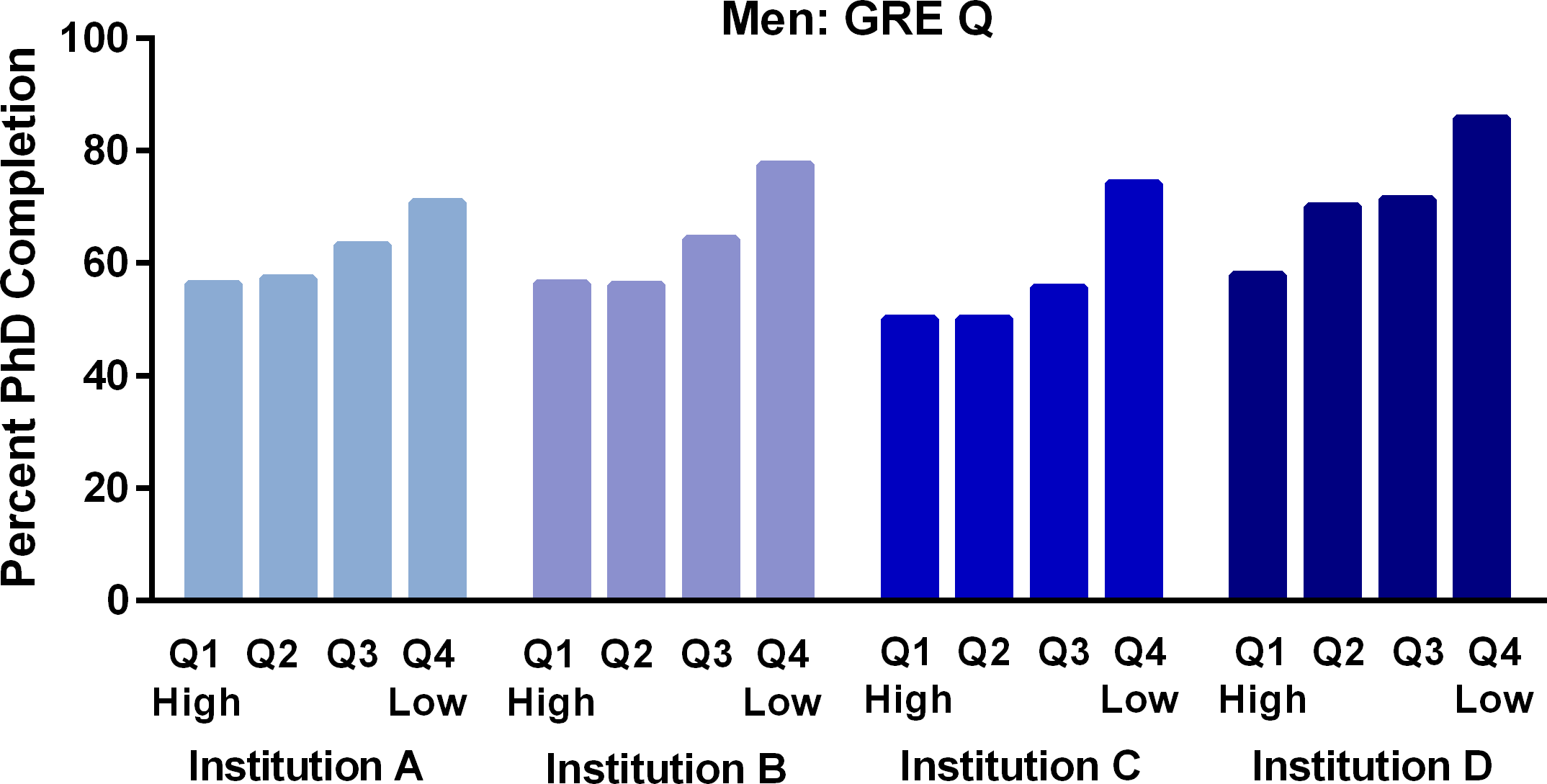
Figure 1. A Multi-institutional analysis of STEM graduate student PhD completion as a function of GRE Quantitatative scores.

One study authored by Petersen et al. (1) gathered data of the degree completion rates in STEM programs from four flagship research universities. The team used a logistic regression to model degree completion as a function of “institution, gender and GRE V or GRE Q scores”. The results showed that men who scored in the lowest GRE Q percentile also had significantly higher rates of PhD completion (Figure 1). Women’s performance on the GRE Q section showed no significant correlation with degree completion in STEM programs. GRE scores also did not predict degree completion time.

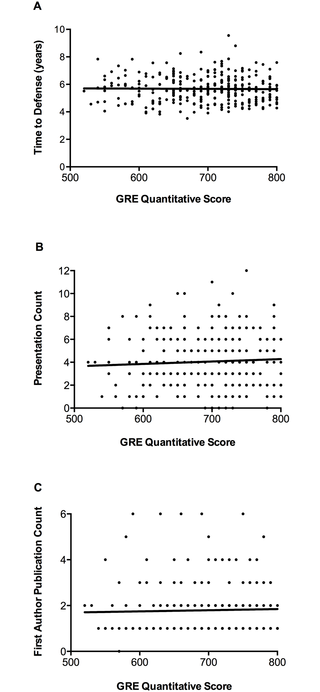
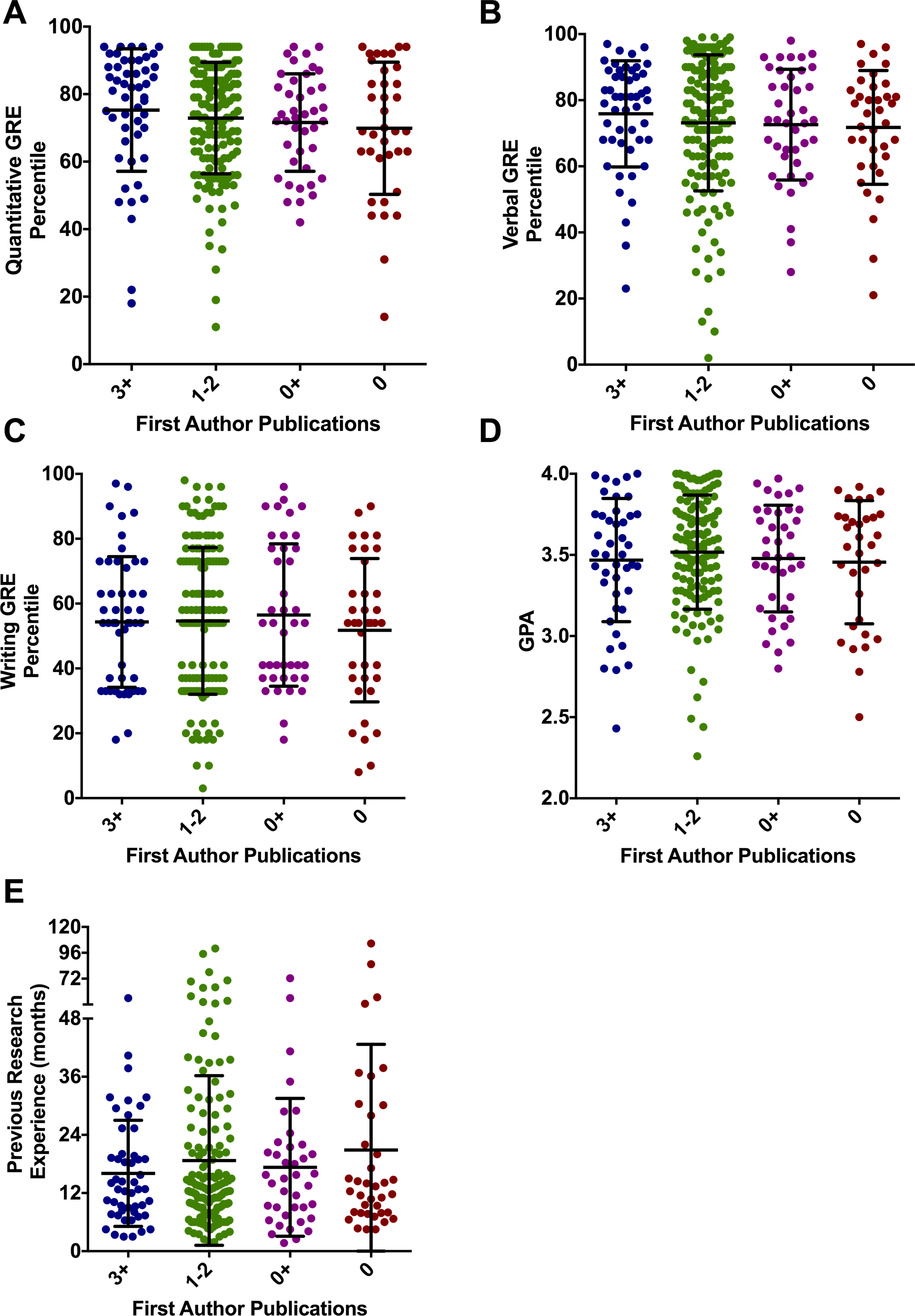
Another study authored by Moneta-Koehler et. al (2) gathered data from 683 students enrolled in their Interdisciplinary Graduate Program (IGP) from 2003 until 2011. The team compared their performance on the GRE Quantitative, Verbal, and Analytical Writing sections with various measures of graduate school success. The measures assessed included ” (1) graduation with a Ph.D., (2) passing the qualifying exam, (3) time to defense, (4) number of presentations at national or international meetings at time of defense, (5) number of first author peer-reviewed publications at time of defense, (6) obtaining an individual grant or fellowship, (7) performance in the first semester coursework, (8) cumulative graduate GPA, and (9) final assessment of the competence of the student as a scientist as evaluated by the research mentor “. The results showed no correlation between GRE Q scores with time to defense, number of presentations, or first author publications (Figure 2). Another study authored by Joshua Hall et al. (3) at University of North Carolina Chapel Hill also found no correlation between the number of first author publications and GRE scores of 280 students in their biomedical PhD program (Figure 3).

Figure 2. Results from a study conducted by Vanderbilt University correlating GRE Q scores with various metrics of graduate school success.
Figure 3. Results from a study conducted by a research team at University of North Carolina Chapel Hill found no correlation between GRE scores and first author papers

It seems as though performance on the GRE fails to predict or even correlate with the success of the admitted graduate students in their STEM programs. Does performance on these tests correlate with anything? Yes.

PART TWO: Okay, so, what DO GRE scores predict?

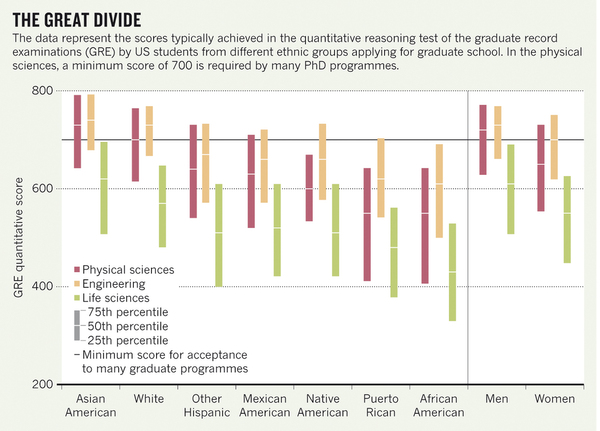
Your skin color and gender. Nature study authored by physicists Casey Miller and Keivan Stassun (3) found troubling disparities in test performance across demographics. STEM graduate admissions programs often place a lot of stock in the quantitative portion of the GRE when deciding whether or not an applicant should be admitted. Data from the Educational Test Service (ETS), the developers of the GRE, show that women score “80 points lower on average in the physical sciences than do men, and African Americans score 200 points below white people” (Figure 4).

Figure 4. Data sourced from the ETS showing the respective GRE Q performances of various ethnic groups.

In the physical sciences, only 26% of women score above a 700 on the GRE, wheras 73% of men make this measure. If the admissions committees do not account for gender and ethnicity, then using GRE scores as a metric to screen out “under-qualified” applicants bottlenecks the diversity of their graduate student body.

PART THREE: The Great GRExit

In light of these troubling revelations, universities and agencies which fund them are dropping the GRE as an application requirement. To name a few programs, the University of Michigan’s biomedical sciences program dropped the test in 2017, with the program director stating “[asking]
students to invest money and effort in a test whose usefulness our faculty cannot agree on [would be] a questionable policy,” . The University of San Francisco dropped the requirement for these programs, and 7/8 schools of Emory University’s GDBBS program are also dropping the test. The National Institute of Health (NIH) changed its GRE policies for attaining individual fellowships and training grants in 2015, and the National Science Foundation (NSF) dropped the test in 2010 (4). A comprehensive list of STEM programs no longer requiring the GRE may be found here.

References:
1) Petersen SL, Erenrich ES, Levine DL, Vigoreaux J, Gile K (2018) Multi-institutional study of GRE scores as predictors of STEM PhD degree completion: GRE gets a low mark. PLoS ONE 13(10): e0206570. https://doi.org/10.1371/journal.pone.0206570

2) Moneta-Koehler L, Brown AM, Petrie KA, Evans BJ, Chalkley R (2017) The Limitations of the GRE in Predicting Success in Biomedical Graduate School. PLoS ONE 12(1): e0166742. https://doi.org/10.1371/journal.pone.0166742

3) Casey Miller & Keivan Stassun (2014) A Test that Fails. Nature 510, 303-304. https://www.nature.com/naturejobs/science/articles/10.1038/nj7504-303a

4)https://www.sciencemag.org/careers/2017/08/updated-biomedical-phd-program-major-research-university-drops-gre-requirement

Featured

10 Questions to Ask Yourself Before Selecting a Graduate Program


Congratulations! It’s mid-December and you’ve just pressed “submit” on your graduate applications. The hardest part is over, and now it’s time for you to sit back and … well, now what? Believe it or not, some graduate schools may be calling you in early January to set-up interviews with you. So for one, start taking those “hmmm maybe that’s spam?” calls. Earning admittance into graduate school is a huge step in your career, one notoriously difficult and even painful at times. Attending a graduate program that suits your priorities will guide you through the bewildering world of higher education. How do you choose the program that may be best fit for you? Ask yourself these 10 questions (in order of decreasing importance).

  1. How many faculty members at this institution would I want to work with?

Your future PI will exert considerable influence on your scientific career. From training you in the cutting-edge techniques of your field, to publishing your work, assisting you with funding, graduating you on time (or not), writing letters of recommendation, and allowing you access to a prolific professional network, your relationship with your PI will last longer than your PhD. Your candidate programs should have 4-6 people with whom you could see yourself working alongside. Things to consider include the following:

  • How many publications have they published within the last two years?
  • Did they publish grad students?
  • How many graduate students have they successfully trained and graduated?
  • How many years did it take former students to graduate, typically? Past performance indicates future performance.
  • Do they have funding?

I made an excel spreadsheet of each faculty member and the aforementioned data. I can’t recommend using scopus enough to help you get a feel for the publications and citation record associated with each author (you can login via your undergraduate institution)

2. How many faculty members at this institution have room for a new student?

While you’re interviewing, or before attending the interview, ask your prospective PI’s about funding. Be straightforward, it’s okay.

3. Are last years students happy? Is there a “buddy” system?

Typically, first year students will guide you around the campus during interviews. Don’t be afraid to add them on social media and get a feel for how they’re liking the program. Having a tight-nit cohort gives you a support group of awesome, motivated people. At my institution, each incoming student is assigned a neurobuddy, and my neurobuddy was a god-send! He offered to help me move, tipped me off to a university-exclusive housing guide, and checked in with me and others in my cohort frequently to ensure we were adjusting well. Doctoral programs are tough. Moving out can be tough. Look to last year’s students to see how tight-nit and well-adjusted they are.

4. Am I responsible for my own funding?

This is a personal question and the importance varies from applicant to applicant. Different programs will offer different stipends, benefits, and tuition breaks. As a newly christened PhD student of Chemistry told me in my undergraduate days “If you’re paying for graduate school, you’re doing it wrong”. Where funding opportunities lack, ask if your prospective adviser will help you find funding. Check to see what the local cost of living is to compare apples to apples.

5. Where are the alumni of this program working now?

Sometimes the program’s web-page will feature a link with a list of alumni and what they are doing now. Check out most recent alumni, the mid-career alumni, and the more seasoned alumni. In general, would you be happy being a post-doc at one of those places or working for a start up at another one of those places? If most of those alumni are in industry jobs, and your heart is set on academia, this may be a red flag.

6. What opportunities exist for career development?

Employment prospects for PhD’s outside of academia are expanding. Industry sector jobs, government sector jobs, science-writing/editing, and technology transfer are only a few examples of burgeoning careers outside of academia. Programs educating their students in the career possibilities outside of academia AND offering training opportunities for them offer a sharp edge in career development.

If you’re interested, the NSF recently published an interactive database noting career trends (employment, pay, etc..) for doctorates in STEM fields. You can sort by institution and by specific program.

7.What opportunities exist for outreach?

Scientists live in symbiosis with the community. Tax-dollars fund the creation of knowledge through scientific experiments and the fruits of our labor benefit humanity. This relationship depends upon clear communication with the public about our work.

Outreach opportunities allow scientists to engage directly with the community; kindling enthusiasm, sparking questions, and clarifying misconceptions where they arise. Everyone is a natural-born scientist. The scientific enterprise flourishes with a diverse labor force. Although we may take these truths for granted, visiting classrooms and hosting STEM booths at the city fair reminds people that science is for, and works for, everyone. Scientific outreach not only educates the public about your work, it inspires them to support it.

Informing the electorate about your research will grant them the understanding and motivation to support your work and appoint representatives to support it as well (Thanks, Obama). Getting involved is as much apart of being a scientist as is publishing, peer-reviewing, or pipetting.

Wherever you may end up, please be a good science-citizen and be apart of the community which helps to enrich the education, engagement, endowment of STEM fields.

8. How rich are networking opportunities within the community?

Find out what networks exist in the community. This will be important as you enter the workforce. For example, Atlanta is home to the Center for Disease Control (CDC), GeorgiaTech, and GeorgiaBio. Emory University, my institution, offers internships with the CDC and GeorgiaTech, to those who are eligible.

9. Ask your gut.

Sometimes things just rub you the wrong way, and that’s okay. Sometimes the program just feels right. Take note of these feelings.

10. Is the community casual or formal?

This is a personal preference thing, although I enjoy a more casual atmosphere.

So, you return home from your successful interviews and you really like a few programs. What to do next? Don’t be afraid to email some of the current graduate students for questions about their experience. They will be the most candid with you. Send your interviewees a personalized thank-you email and let them know that this program is a priority for you. Despite receiving offers from a few other universities, Emory University was my top-pick, and I couldn’t be happier with this program. I personally think that sending a few emails to the faculty and students underscoring my interest in the program helped me receive a letter of acceptance from them.

Good luck everyone, the worst part is over! A graduate program is an enriching experience which will teach you how to think critically and create new knowledge. It is as enthralling as it is frustrating. In these next few months, you will be getting calls and emails inviting you to visit campus’s. The programs of interest will try their hardest to recruit each of the attendees, and will showcase the assets they have to offer you. Now it’s time for you to be selective.